Understanding Mandarina: A Versatile Script Font for Creative Projects
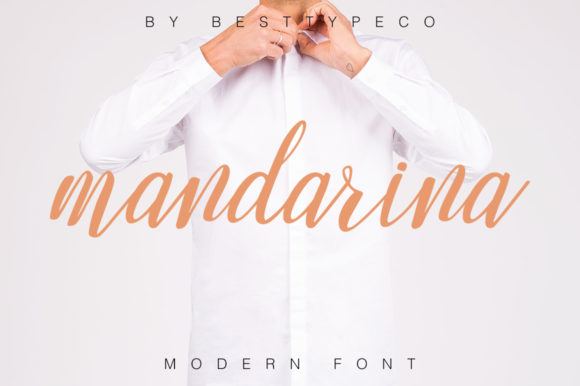
When searching for a script font, you are often faced with a choice between formal, rigid calligraphy styles and more casual, handwritten options. Mandarina occupies a distinctive space between these categories. It is described as a bouncy script font, which means it incorporates the fluidity and personality of handwriting while maintaining a consistent, designed structure that makes it highly usable. Its core appeal lies not just in its baseline style but in its extensive set of ligatures—special combinations of letters that flow together as a single, artistic unit. These ligatures are what transform Mandarina from a simple script into an incredibly versatile tool.
What Distinguishes Mandarina From Other Script Fonts
Many script fonts offer a single, static look. Each letter is always the same, and while you can adjust spacing, the character shapes remain fixed. Mandarina’s approach is different. The inclusion of numerous ligatures allows the font to adapt its appearance based on which letters you type. For instance, common pairs like “th,” “ea,” or “ou” can be rendered as unique, connected glyphs that add a flourish without requiring manual design work from the user. This built-in intelligence gives it a dynamic quality often missing in standard script fonts.
Comparing it to broader categories, Mandarina sits apart from both ultra-formal Copperplate-style scripts and loose, scratchy handwritten fonts. Its bounce provides a friendly, approachable tone, while its clean lines and intentional ligatures ensure it retains a professional polish. This makes it a candidate for projects where a purely casual script might seem too informal, and a traditional calligraphy font might feel too stiff. It’s a balanced option, offering character without chaos.
Evaluating the Strengths and Practical Benefits
The primary strength of Mandarina is its versatility, directly derived from its ligature system. This feature automates much of the artistic touch that designers or creators might otherwise need to add manually. For someone creating social media content, like fonts for Instagram posts, this means you can achieve a sophisticated, custom-looking typography quickly. The font handles the decorative details, letting you focus on layout and message.
Another significant benefit is its applicability across different mediums. Because it is a digital font, it scales perfectly from large print projects, like wedding invitations or poster design, to small-scale digital uses, such as logo embellishments or website headers. Its bounce ensures readability remains good even at smaller sizes, a common weakness for some more ornate scripts. For DIY projects, where users might be working in word processors or basic design software, Mandarina’s ease of use is a major advantage. You simply type, and the ligatures appear where available, turning a basic text into a true piece of art with minimal technical skill required.
Key Use Cases Where Mandarina Fits Well
- Branding and Personal Projects: For small businesses, bloggers, or creatives wanting to establish a warm, artistic brand identity without a overly corporate feel. Mandarina can add a signature touch to logos, packaging, or merchandise.
- Digital Content Creation: As mentioned, it is a strong candidate for social media graphics, YouTube thumbnails, or email headers where visual appeal drives engagement.
- Event and Personal Stationery: Its friendly yet polished aesthetic works well for invitations, greeting cards, or celebratory announcements.
- Mixed-Media Art Projects: For crafters incorporating text into physical art, digital cutting machines or printable designs using Mandarina can elevate the final product.
Considering Trade-offs and Limitations
While Mandarina is versatile, it is not a universal solution for every typographic need. Understanding its limitations is crucial for making an informed decision. First, it is inherently a decorative font. Its use for long body text—paragraphs in a book, lengthy website articles, or instructional manuals—would be ill-advised. The decorative ligatures and bounce would hinder readability over extended reading. It is best employed for headlines, short phrases, labels, and decorative elements.
Second, its specific tone of “bouncy” and friendly may not align with projects requiring gravitas, minimalism, or extreme modernity. If you are designing for a tech startup, a legal firm, or a project that demands stark simplicity, a script font like Mandarina, regardless of its polish, might send the wrong message. In those cases, a sleek sans-serif or a more geometric font would be a more appropriate alternative.
Finally, the reliance on ligatures depends on software support. Most modern design applications (like Adobe Creative Suite, Affinity tools, or even Canva) support OpenType features like ligatures. However, in some very basic text editors or older software, you might only see the standard characters without the ligature magic. It’s wise to test in your intended workflow before finalizing a design.
When You Might Need Another Option
Choosing a font is about matching the tool to the task. Mandarina may not be the right choice in several realistic scenarios. If your project’s primary need is ultimate readability and neutrality—think a website’s main content, a textbook, or an official form—a traditional serif or sans-serif font family is essential. Script fonts, by nature, add stylistic commentary that can distract from pure information delivery.
Similarly, if you are seeking a hyper-formal, traditional calligraphy look for a classic wedding invitation or a diplomatic certificate, fonts that mimic exact pen nib styles (like formal cursive or Spencerian scripts) might be closer to the historical authenticity you require. Mandarina’s bounce introduces a contemporary playfulness that could deviate from that desired tone.
Lastly, for projects where custom, hand-drawn lettering is the goal, a font might not suffice at all. While Mandarina offers artistic flair, it is ultimately a standardized set of characters. If your vision requires completely unique, irregular letterforms tailored to a specific illustration, hiring a lettering artist or creating your own handwritten text would be the path, despite being more resource-intensive.
Making a Decision: Factors to Weigh
To determine if Mandarina is a fit for your needs, consider these practical factors beyond simple aesthetics.
- Project Tone and Audience: Does the friendly, artistic vibe of Mandarina align with what you are communicating and who will receive it? Test it alongside your imagery and color palette.
- Technical Context: Will you be using software that fully renders its OpenType features (ligatures)? Can you, or your printer or web developer, ensure they display correctly in the final output?
- Length of Text: Is the text a short headline, a name, a tagline, or a quote? Or is it long-form content? Reserve Mandarina for the shorter applications.
- Budget and Skill Level: Compared to commissioning custom lettering or buying an entire expansive font family with multiple weights, a single versatile script font like Mandarina can be a cost-effective and skill-efficient solution for adding high-level design appeal.
- Flexibility Needs: Do you need one font that can work across multiple, different kinds of projects (a social media post, a flyer, a gift tag)? Mandarina’s versatility might serve you better than a more niche, narrowly styled script.
Exploring alternatives is a natural part of this process. When looking at other script fonts, pay close attention to their ligature sets, their baseline style (is it more rigid or more casual?), and their demonstrated use cases. Some fonts offer fewer ligatures but more traditional elegance; others might offer more ligatures but a more chaotic handwritten feel. Mandarina’s position is one of balanced, designed bounce with automated ornamental connections.
Conclusion: A Tool for Creative Translation
Ultimately, Mandarina serves as a powerful tool for translating a creative idea into polished visual text. It reduces the technical barrier to achieving complex typographic detail, making it accessible to professionals and DIY creators alike. Its distinctiveness comes from its engineered bounce and its smart ligature system, which provide adaptability across a range of friendly, artistic projects.
By understanding both its capabilities—like enhancing Instagram fonts or DIY project calligraphy—and its inherent limitations regarding long text and formal tone, you can make a more informed evaluation. It shines in situations where personality, approachability, and automated artistry are priorities. For tasks demanding neutrality, extreme formality, or completely unique hand-drawn aesthetics, other options will likely be more suitable. The key is to match the characteristics of the font, like those inherent to Mandarina, precisely to the requirements of your project and the expectations of your audience.